Showing posts with label news. Show all posts

Monday, 20 June 2016

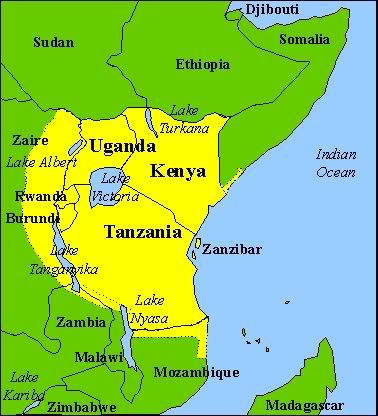
Kenya to Host East Africa Center for Disease Control

After a successful capacity assessment conducted by experts from various international health bodies such as World Health Organization (WHO), African Union (AU), US CDC and China CDC, Kenya has been selected to host the Eastern Africa Regional Collaborating Center of the Africa Centers for Disease Control (CDC). This was disclosed by the Health Ministry in a statement earlier this month.
According to the statement, the Africa CDC intends to use this center to monitor and address public health issues in the region as well as to monitor the response to and handling of emergencies and outbreaks within the region.
Kenya is said to have earned hosting rights because of the strength of it's disease surveillance systems and how it was engaged in sending health experts to Liberia and Sierra-Leone during the Ebola epidemic.
There will be a formal endorsement of Kenya to function in her new capacity by the Heads of state during the African Union (AU) summit. Other regional collaborating centers of Africa CDC are: Egypt, Gabon, Nigeria and Zambia.
Also included in the statement was the fact that, “The award is expected to strengthen the country’s health systems by enhancing disease surveillance capacity in terms of infrastructure and human resources, disease outbreak alert systems as well as improve laboratory capacity.”
This is a positive and commendable development and the health sector of Kenya is sure to experience a boost as a result of this.
 
Written By: Ozioma Paul

Tuesday, 14 June 2016

Ebola - like disease in South Sudan

Ipast weeks, an Ebola-like disease has hit South-Sudan and has claimed at least 10 lives. The mysterious South-Sudan fever is said to have symptoms similar to Ebola such as bleeding, fatigue and vomiting. However, laboratory tests so far have proven that it is not Ebola and the World health Organization has reported that unlike Ebola, these symptoms quickly disappear when the patients are treated effectively. Other observations and investigations have also revealed that this fever does not seem to be transmissible from person to person as is common with the Ebola virus disease, the mode of transmission is still unclear.

According to the World Health organization (WHO), South Sudan has since last December reported that there have been about 51 reported cases of the “undiagnosed hemorrhagic fever syndrome”. 
All of these cases occurred in the northwest countries and the WHO stated that the spread of this disease to this part could very well be attributed to the North-South Sudan Border movement.This has become a source of serious concern to South Sudan and international health bodies.

Rohit Chitale, an epidemiologist with the United States-based Center for Disease Control and Prevention (CDCP) stated that: “the lab results are not consistent with the symptoms, and that is what is concerning.” Blood samples were taken to WHO laboratories from South Sudan for further tests and reports have shown that although some of these blood samples tested positive to mosquito-borne viruses, none of them tested positive to Ebola or Zika Virus. This leaves the cause of the deaths still unexplained. Further laboratory tests are on-going to reveal the causative agent.

Tuesday, 24 May 2016

WHO CONFIRMS ZIKA VIRUS IN AFRICA

Dr. Matshidiso Moeti, the Regional Director of World health Organization (WHO) for Africa has confirmed the spread of Zika virus in Africa.
The disease is caused by a certain breed of mosquito known as Aedes mosquitoes, it has been linked with microcephaly (a fetal brain abnormality in which babies are born with small brains). Some of the symptoms include mild fever, skin rash, conjunctivitis, malaise or headache and these symptoms often last for 2 to 7 days.
WHO stated that for the first time scientists were able to confirm the spread of the Asian spread of the virus in Cape Verde. Dr. Anna Checkly of the University College London Hospitals also stated that: “There has been an outbreak of the Zika Virus Infection in Cape Verde since October 2015, and today the World Health Organization confirmed that it is the Asian, rather than the African strain of the virus that is causing these infections.” Tests have proven that this Asian strain is the same one said to be responsible for the birth anomalies recorded in Brazil.  Dr. Checkly also warned that the Asian strain of the virus which was confirmed in Africa by the WHO is probably more infectious to humans than the African strain.
As stated by the Global Health Agency, In Cape Verde there has been over 7000 suspected cases and 180 pregnant women have been infected with the virus. Meanwhile, the World Health Organization has also stated that already three babies have been born with microcephaly.
Dr. Moeti has implored Africans Countries to increase awareness of the virus among pregnant women. She also advised that travellers protect themselves from mosquito bites although she said she would not recommend any strict travel restrictions.
There is currently no vaccine or specific treatment available to cure this disease. Hence, the best form of prevention and protection available is protection against mosquito bites.

Written by: Ozioma Paul

Thursday, 28 April 2016

At the 2016 Unite for Sight Global Health and Innovation Conference in Yale Connecticut


16th to 17th April 2016 was a beautiful weekend with the perfect spring like weather in the downtown New Haven area of Connecticut.

The great Shubert theater alongside other historic venues hosted the Unite for sight 2016 Global Health and Innovation conference.

I was privileged to listen to seasoned speakers give talks on health and technology and to attend the social impact lab (early stage ideas), which featured innovators working to improve the quality of life of people everywhere and especially that of the developing world populace. $10,000 and $2,000 awards were given to qualifying participants of the health innovation competition.

Many sessions were centered on innovations and technology, data, global health, work in Africa and the developing world at large.
 

Challenges such as the need to improve maternal and child health in Haiti, tackling obstetric fistula in Africa, HPV vaccination, cataract eye surgeries, improving access to safe surgeries in resource constrained settings, malaria and mHealth, universal health coverage, challenges with nutrition at different levels (to mention a few) were discussed at the sessions.

The take home point for me, and one of the main highlights of the conference was the emphasis on the creation and development of innovative solutions to address the health and development challenges experienced both in the developed and in the developing world.

Bobby Jefferson, the director, center development informatics, Palladium made it clear that there are funding opportunities available for innovations and especially in Africa. In his talk titled "Innovations in mHealth: lessons from the field," he spoke of the several innovations in sub Saharan Africa that he and his team have been involved with and discussed various ways to improve the adoption of innovative solutions and minimize cost on the journey to establishing the innovation solutions.

Other sessions centered on sustainable development and the climate change agenda were also held.

Participating in the 13th annual
Unite for sight conference was educative, informative and magnified the rays of hope for sustainable solutions and development for Africa and the developing world.
It was nice to know that we are not alone in the quest for development within the African health terrain. It was also great to meet with and see so many great minds working to ensure development in the most impoverished regions of the world.

Keep up the good work!

Monday, 4 April 2016

The Ebola virus outbreak is no longer an emergency!!!


The 9th meeting of the Ebola emergency committee organized by the World Health Organization (WHO) Director­ - General under the International Health Regulations (IHR) concerning the Ebola virus outbreak in West Africa took place on the 29th of March 2016. It was said at the meeting that the Ebola virus situation in West Africa is no longer a public health emergency of International concern. Hence, the suspension of the temporary recommendations adopted in its response.

The Director - General of the committee alluded to the fact that the meeting advised him that the Ebola situation in West Africa no longer constitutes a Public Health Emergency of International concern. He further reiterated that a cluster of new Ebola cases and deaths have been reported in Guinea and involve a single chain of transmission. In the committee’s view, the affected country(ies) have the required capacity and capability to manage the flare ups. 

He further said that experts on Ebola noted during the meeting that the Ebola response capacity in West Africa is strong. 

Also in anticipation of further flare ups, the committee has kept hundreds of its experienced staff ready to contribute to the kind of emergency response needed to interrupt the transmission chains.

Indeed this is great news! However, the West African community must maintain the capacity and readiness to prevent, detect and respond to any ongoing transmission or flare up of new cases in the future.


Meanwhile, in Liberia, a flare up of Ebola cases is being attended to by the Liberian health authorities. This latest flare up of Ebola in Liberia has been traced to a woman who arrived in Liberia from Guinea on the 21st of March 2016 after her husband supposedly died from unknown causes in Guinea.

Written By: Jimoh Waliu

Wednesday, 23 March 2016

HUGE DAMAGE CAUSED BY RAINSTORM IN GHANA – 200 PEOPLE DISPLACED


The rains are here again. In some West African countries, the effect of the rains is already being felt by the people even though the rainy season is not yet in full swing.
In Ghana, on Monday, about 200 people were displaced due to the heavy rainstorm that lasted for about an hour at Atomfourso, near Seekwa, in Tain district of Brong Ahafo. The rains came with strong wind and a total number of thirty four houses were destroyed entirely.
The district coordinator of the National Disaster Management Organization (NADMO), Mr. David Amankwah confirmed this to the Ghana News Agency (GNA), describing the damage done as “huge”.
Appeals are being made by various stakeholders that mobilization of relief support be made for the affected parties.
The chief of the town, Nana Ekye Nsowah-Adjei highlighted poverty in the region as a principal player in the incident. The residents of the locality generally find it difficult to build sturdy cement - block houses, and this lack of well built homes continually puts the people and their houses at risk whenever there is a rainstorm.
He has joined in the call for help from various quarters, such as from the government and from other well intentioned non-governmental bodies and has suggested to the department of Rural Housing on the need for governmental assistance in designing strong low-cost houses in the region that can withstand occurrences such as this. He also added that only qualified builders with the needed requisite skills should be engaged in the construction of the buildings.

In recent times, neighbouring Nigeria has also had records of flooding in some major cities. It seems as though West African communities fail to adequately prepare for the heavy rains which occur annually at nearly every rainy season.

Efforts are being made by governmental bodies, to scale up weather forecasting and prepare the residents of likely future flood locations ahead of the rains. International bodies such as UNICEF have started synergizing and mobilizing Nigerians that are located in the flood prone regions for an effective flood response.

Written By: Ozioma Paul

Monday, 8 February 2016

The on going drought in East Africa .....

East Africa is experiencing one of the worst cases of drought and food insecurity. Lots of lives, and livestock have been lost due to the starvation and famine that has characterized this region in the past months. This is largely due to the poor rainfall in 2015 and the ongoing El Niño which has resulted in severe crop failures, this situation is being worsened by the recurring conflict in the region. 

 The conflicts that have gone on for a while in some parts of East Africa such as: Yemen, South Sudan, Burundi has resulted in high rates of displacement of people. This displacement is a contributing factor to the current state of East Africa especially in Ethiopia and South Sudan as regards food security, this is because when displacement occurs, people lose their lands, shelter, farmlands, food stock and livestock. Also, when people are displaced, they are separated from the little sources of food: such as markets and farmlands, water, and other basic necessities of life such as: proper health care and a means of income amidst others. 

Asides from the displacements, when there is crisis and fighting, there is instability and many people would be unable to plant crops.
According to the LA Times, “10.2 million Ethiopians are in critical need of food aid. International agencies are trying desperately to raise funds to prevent the food emergency from deteriorating into a full-fledged famine, but so far they say they have raised only a small portion of the cash they need to offer help. As El Niño continues into 2016, in some regions that have experienced the El Niño-related dryness, access to food is expected to deteriorate significantly.” Serge Tissot of the U.N’s Food and Agriculture Organization also stated that “the World Food Program has less than 5% of the funding it needs to help the people in Ethiopia”. The situation is very critical and as at now, livestock are being severely affected. Apart from the crop failure and death of livestock, about 2.1 million people are severely malnourished in Ethiopia.
The current state of East Africa is not far from full-fledged famine. The international bodies we usually would look up to for help do not have enough resources to completely combat the situation in these regions. It gets worse as the people are forced to consume that which would be used for the next planting season. This poses a threat to the little progress and development this region has recorded over the past decade.
Conclusively, if the conflict in East Africa continues to worsen, then most certainly the issue of food security will also continue to deteriorate. This serves as a call for international intervention firstly to help put an end to this prolonged crisis, provide food supplies to the affected people and then help improve on the state of crops and livestock.

Thursday, 14 January 2016

Lassa fever: A Wake-Up Call for Nigeria.

It is no longer news that for past six weeks, there has been an outbreak of Lassa fever in Nigeria that has spread to 10 states already. Described as “Ebola-Style” by The Associated Press, this outbreak has so far claimed 41 lives out of the reported 81 cases. The symptoms of Lassa fever are in some ways similar to Ebola from high fever, to hemorrhaging of the eyes, gum and nose to almost eventual death; this has brought fear to people within and outside Nigeria. The minister for health, Prof. Isaac Adewole in his speech last week in Abuja officially announced the outbreak and informed the general public to remain calm as he stated that measures have already been put in place to curb the spread of the disease.
Since its first episode 47 years ago, Lassa fever has continually remained a source of great concern to Nigerians as it has resulted in the death of poor Nigerians from time to time. The reasons for this may not be so far-fetched. Research has shown that regions associated with extreme poverty are more prone to spread of this class of disease. These regions are highly underdeveloped, and in most places the health system and hygiene of the people is way below standard. This includes their ways of food processing and storage, the state of their homes and social places, the clinics and hospitals. We would reckon from our previous posts that the Lassa fever is transmitted via the link human-rat and rat-human and the major source of transfer is exposing of food such that these rodents have access to them. This explains why these regions are mostly affected by diseases like this.
As we further examine the root cause of this recurring epidemic, Prof. Dennis Agbonlahor stated that “There is not enough awareness of the endemicity of this disease in Nigeria”. He also explained that, “There is a large reservoir of the Lassa virus in rodents, and experts believe getting rid of rodents that carry the virus would solve a large chunk of the problem.” In getting rid of these rodents, there is the need to ensure that proper personal and environmental hygiene is enforced and maintained.
Dr. Oyewole Tomori made a statement: that Lassa fever has been “an annual recurrent budget of death for the poor people of Nigeria”. He gave his reasons: “Because we have lived in a state of denial of the disease and handled it with characteristic laxity, laissez-faire, negligence sloppiness, slackness, disregard, triviality and freewheeling abandon”.
As pointed out by several people the major reasons why this disease is persistently periodic are: Poor personal and environmental hygiene, lackadaisical attitude of the government towards the disease and ignorance.
This outbreak and rapid spread serves as a wake-up call to the Nigerian government. Having lost 41 lives out of the reported 81 in 6 weeks, there is the need for the government to ensure that health centers across the nation are standardized and better equipped with facilities and adequate staff to combat and quickly curb outbreaks like this, especially in the not-so developed regions that are associated with high level of ignorance and poverty. There is also the need for the Nigerian Government to have stand-by rapid response teams heavily equipped such that at the slightest notification of outbreaks such as this, they swing full into action to prevent this manner of loss of lives. The government should also make efforts to encourage proper personal hygiene amongst the people and we may just be saying goodbye to our last occurrence of the epidemic.
Culled from: Daily Trust
Written by: Ozioma Paul

Friday, 8 January 2016

An Update on the Lassa fever outbreak in Nigeria ........

Lassa fever is an acute, infectious, often fatal illness characterized by high fever,
muscle pain, headaches, bleeding and death in severe cases. It is a viral disease caused by Lassa fever virus with an incubation of 6-21 days.

Lassa fever is Zoonotic in nature as it affects both humans and animals alike. The link to humans is the African soft-furred rat. This animal usually gets on to leftover food or food left to air dry in the open. While feeding on these, the rodents
may urinate and/or defecate and pass the virus on-to humans who eat the contaminated food.


In the past 47 years, Lassa fever has threatened Nigeria at different times and in the last six weeks, there has been an outbreak of the disease in Nigeria. This outbreak started in November 2015. The first reported case occurred in Bauchi and it thereafter spread to Kano, and subsequently six other states; namely Nasarawa, Niger, Taraba, Rivers, Edo, and Oyo.

This was confirmed in a report on 6th January, 2016 in Abuja, the country’s capital by Nigeria’s minister of Health, Prof. Isaac Adewole. In his speech, he stated that “The total numbers of suspected cases so far reported is 76 with 35 deaths, and a Case Fatality Rate [CFR]of 46 per cent. Our laboratories have confirmed 14 cases, indicative of a new episode of Lassa fever outbreak.”

According to the minister of health, the following measures have been put in place to curb the spread of the disease and to investigate and trace the reported cases:
Immediate Release of Adequate quantities of ribavirin. The specific antiviral drug for Lassa fever to all the affected states for prompt and adequate treatment of cases.
Sensitization, and mobilization of healthcare workers in the affected areas and the deployment of rapid response teams.

For now, most of these are already been implemented and the battle against Lassa fever is still on.

Written by: Ozioma Paul 

Wednesday, 6 January 2016

Lassa Fever in Taraba Nigeria .....

A new outbreak of Lassa fever in "Taraba" a state in Nigeria, has just been confirmed by the Taraba state Government. In the words of the commissioner of Health, “One person died and two others have been quarantined and their blood samples have already been taken to Irrua specialist hospital in Edo state for further confirmation.”

Seeing that this new development could create fear and panic among the people in this area who are just recovering from the Ebola scare in the West Africa region, Mr Vakkai in an address on Friday advised the general public to refrain from  panicking, he further added that the state government had swiftly responded to the outbreak.

 Talking on how the fever spreads he said;


“People usually get infected with the Lassa Virus after exposure to infected rodents, while person to person transmission occurs through direct contact with the sick person,”

He called on the residents to avoid contact with rats especially in the areas where the outbreak occurred.

“Other precautionary measures include putting food in rodent proof containers and wearing protective garbs such as masks, gloves, gowns among others,” he added.
 

Mr. Vakkai further called on residents to report to the nearest hospital any case of nasal bleeding, as well as bleeding through the anus and mouth which could also be symptoms of the disease.

Source : NG Premium times
Written by: Jimoh Waliu

Tuesday, 29 December 2015

COP21, A POSITIVE STEP IN MANAGING CLIMATE CHANGE

In an earlier post we reviewed a world bank’s report on the predicted impacts of climate change.
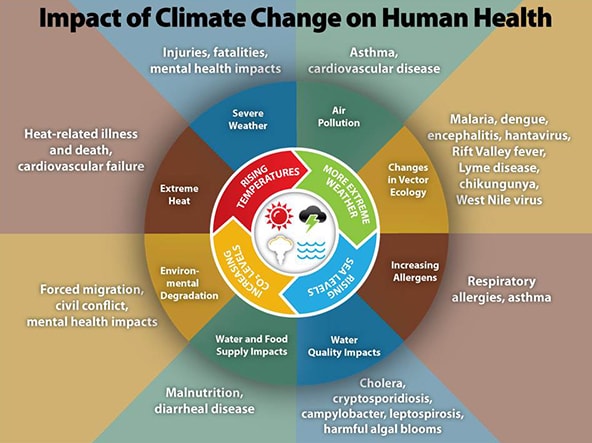
In this piece, we would be considering our current position as regards climate change and the way forward. Climate change is a change in the weather patterns brought about by a continuous unstable varying in the factors that affect climate. Currently, the world’s climate is experiencing some changes and this can be tied to a condition known as global warming.
The principal cause of climate change is human activities; both domestic and industrial. This includes deforestation, and burning up of fossil fuels; these two lead to emission of greenhouse gases such as carbon thereby increasing the amount of carbon in the atmosphere. This becomes a problem because these gases act as a “cover layer” for earth, so as the gases increase in the atmosphere, the “cover layer” becomes denser leading to global rise in temperature.
Globally there have been predictions of future effects of climate change. One very threatening effect is the risks climate change presents to agriculture especially in sub-Saharan Africa. This is because, if the current situation of climate persists, there will be increase in the overall temperature globally leading to dryness, drought, lack of rainfall, melting glaciers resulting in rise of sea-levels. These consequences have adverse ripple effects on the general health of people and quality of natural resources such as food scarcity, air pollution.
Currently, there are significant evidences of these effects globally and if immediate action is not taken and these effects continue to intensify, in the near future, it would be discomforting and almost unbearable for inhabitants of planet earth. There is however hope in sight as solutions to climate change have been identified. One of the solutions is to discourage deforestation (as green life: plants help absorb carbon from the atmosphere face of all of these changes) and burning of fossil fuels. This is to bring about a balance in the amount of carbon in the atmosphere. This can be done by enforcing policies against human activities that give rise to carbon emissions. This is where the government comes in.
It was in this light that the 21st Climate Conference of Parties (COP21) was held in Paris from 30th November to 11th December. The aim of this conference was to achieve a legally binding and partly voluntary agreement across the participating nations to limit global warming to about 2C. There were about 195 countries in attendance and the conference lasted for about two weeks. The United States and China have been identified to be the biggest emitters of carbon, they were both present at the conference and there was a unanimous agreement to cut down carbon emissions in their activities; both domestic and industrial; this is a great opportunity to channel all our efforts as one against climate change.
In the words of Nick Mabey, the chief executive of climate diplomacy organization E3G, “Paris means governments will go further and further to tackle climate change than ever before.” I agree with him, and a lot of comments after the event tailored towards this fact: That though COP21 is a very laudable achievement, it is not going to be automatic in producing the desired results, hence there is need for commitment on the side of the government and also individual parties. One of such commitments would require them standing by their promise to review progress every five years, another would be to finance issues surrounding climate change in developing countries with a sum of $100 billion annually.
Asides the COP21 pact, another very key solution is in getting individuals involved in this fight. A lot of people especially in developing nations are still unaware of the struggle against climate change and as long as they remain unaware, they may not check their activities, such that as we fight climate change from one end, they fuel it from the other end majorly by their domestic activities. This is very dangerous because just as predictions state, the developing nations will be the most adversely affected. It is in this vein that we call on individuals, communities, small groups to begin the campaign against climate change because the fate of our planet in the next 50 to 100 years is in our hands.
For those who already know about this struggle and are working to reduce climate change, this is coming as an encouragement and also as a reminder so that you do not relent on your efforts. Hopefully, in the next couple of decades, we would be able to tell a different story as concerning the state of our planet.
Written by: Paul Ozioma

Saturday, 26 December 2015

Ebola Update ... The fight against Ebola Virus Disease: An ongoing battle.


In April 2014, starting in Guinea, there was an outbreak of the Ebola Virus Disease which was the 26th outbreak in history and the longest Ebola epidemic so far. The epidemic ravaged throughout the year into 2015. Affected countries include Guinea, Liberia, Sierra Leone, Nigeria, Senegal, United States, Spain, Mali and United Kingdom. Highest number of cases and deaths recorded were in Liberia, Sierra Leone and Guinea.
Efforts have been going on especially in the highly affected nations to curb the epidemic. The last cluster of cases recorded of the Ebola virus occurred in Liberia, the first case in the cluster was a fifteen-year old boy who was reported dead on 23rd November, 2015. The two other cases: His 40-year old father and 8-year old brother were tested and twice, they tested negative and were discharged on 3rd December, 2015.
As at 11th December, 2015, rVSV-ZEBOV Ebola Vaccine had been administered to the 210 cases associated with the cluster. This cluster of cases in Liberia is said to have been caused by a resurgence of Ebola virus in a formerly infected fellow. Even though the probability of transmission through resurgence of the virus from a previously infected person is low, there is need to put in place a care-plan and follow-up services for those who survive the disease to ensure there is no re-emergence. In Liberia and Sierra Leone, work is already been done and clinical services are already being put in place to cater for the survivors. This care-plan project for survivors is due for completion in January 2016.
There is also a surveillance system in place to keep close watch on sicknesses and deaths with suspected trace to the Ebola Virus Disease. This is to ensure there is no reemergence of EVD. Rapid response teams have been set up across the affected nations, at least one in each nation to ensure that they are able to detect, test and investigate, manage and curtail any new cases that may surface. These measures are to reduce the risks of the disease and improve emergency response in event of new cases.
As long as a particular state, city or nation still has traces of Ebola Virus Disease and has not been declared “Ebola Free”, people everywhere may still be at risk. Every country should be prepared and ready to effectively detect, investigate, test for, and manage the spread of the disease. They should also have adequate and well-monitored healthcare systems for both new cases and survivors.

Written By: Paul Ozioma

Sunday, 29 November 2015

REVIEW: THE GAMBIA HAS SOME OF THE BEST HEALTH SYSTEM INDICATORS IN SUB-SAHARAN AFRICA

On Friday, the 20th of November, 2015, Sara Beysolow Nyanti stated that The Gambia has some of the best health system indicators in Sub-Saharan Africa. She did this at the launching of the State of the World’s Children report at Kairaba Beach Hotel, The Gambia. Madam Sara is the UNICEF Country Representative and United Nations Resident Coordinator. She made some observations about the improved state of health issues to back-up her assertion.
At this year’s report titled “Re imagining the future: Innovation for every child”, She outlined her observations on how innovation has been a principal factor in the progress made for the children since the start of The Convention on the Rights of the Child in 1989. She explained that through innovation, communities, entrepreneurs and young people can come up with local solutions with global impact for the children.
She talked about equity in children and how that all children should be given equal and fair chances. Many gains have been made by ensuring equity in children, She gave an example, that in The Gambia all children; boys and girls, irrespective of their financial background have access to primary school education. Now, this is very critical in redefining the entire country because basic education when made accessible to all provides the basic platform for success.
She went on to describe her observations as regards the improved state of The Gambia’s health sector. Madam Nyanti stated that immunization in the rural areas is very high and this is encouraging. She also spoke on the now experienced "cleaner environments," pointing out the fact that in The Gambia only 2% of the children still openly defecate. The remaining 98% have improved sanitation in this regard. This spells out an improvement in the health sector as a whole. This is because quite a number of deadly diseases can be avoided by immunization and a clean environment will reduce the possibilities of  breeding disease-causing organisms.
Irrespective of this notable observations, she acknowledged the fact that there are still some challenges in certain sectors. An instance is in the case of immunization. Over the years, a lot has gone into immunization in the rural areas and even though today, there have been commendable improvements, the immunization rate in the urban area has been brought down to 58% because of less concentration of efforts in those areas. This defeats the purpose of equity as everyone, either rural or urban dwellers should have equal and fair chances for accessing health services such as immunizations.
She pointed out that 17 of the sustainable development goals (SDG) deal with areas that directly impact the well-being and rights of children, thereby giving all development partners the opportunity to have strategic engagements in monitoring of the children’s’ progress and in responding to their needs.
Conclusively,  it can be said that The Gambia is worthy of emulation. This also spells hope that indeed African countries can develop, build and maintain a long-lasting and functional health system and ensure that equity is built into every sector to guarantee that the poor and the needy are not left out. 
I encourage other African countries to take the issue of equity especially as regards the health and the education of children very seriously. This helps to ensure that everyone is given a chance, moreover the children are the future of a nation, group, community or family. These are the ones who in the near future can birth the solution to today's unsolved problems and answer the world's unanswered questions.
Written By: Paul Ozioma
Friday, 20 November 2015

A REVIEW OF SOUTH AFRICA’S SUGARY DRINK SHOCK

A recent discovery has placed South Africa (behind Mexico) as second when it comes to deaths related to the consumption of sugary drinks. This shocking discovery was reported by Boston based Tufts University and was published in the journal circulation, it was said that sugary drinks may be traced to be the cause of an estimated 184,000 adult deaths every year all around the world.
Estimates were made from 62 dietary surveys that included 611,971 people, this was conducted between the year 1980 and 2010 across 51 countries, and data on national availability of sugar was also used.
With 405 per million adults’ death in Mexico, the highest in the world it tops the list of countries with the highest deaths related to sugar. Not only did South Africa rank second with 153 deaths per million adults, a separate research in journal Plos One in August reveals that an average South African consumes 165ml of fizzy drinks per day; this is especially alarming because it is well above the global average 133ml.
Another ranking by Bloomberg shows South Africa is one of the unhealthiest countries in the world and has the highest risk rating in the world. South Africa is the most obese country globally; there is widespread poverty, high levels of alcohol consumption, high level of violence and crime and even high level of HIV and related diseases. All these were considered in a research based on health score and risk score expressed as health grade. Apparently the world’s unhealthiest countries are African nations, in fact in the bottom 25 the only non-African country is Afghanistan. This is especially bad as most Africans don’t even have access to proper health care; most can’t afford time-to-time medical checkup. There is abject poverty across most African states. All these are factors responsible for low health grades in African countries.
Talking on the high sugar related death in South Africa one of the best ways to tackle this is to implement the sugar tax that was proposed in 2014. One might be wondering, will that reduce the consumption of sugar drinks? Well the introduction of sugar tax in Mexico has gone a long way in cutting the purchase of soda and other taxed drinks by ten percent. If you ask me, I will say there is no harm in trying.
According to CDC guide to strategies for reducing the consumption of sugar-sweetened beverages, the following strategies can be adopted to help reduce the intake of sugary drinks; Ready access to portable drinking water, I’ve heard quite a number of people say they crave sugary drinks when they are thirsty, the result is that these drinks don’t quench our thirst as expected but instead one is likely to go for more of the drink, little wonder why research placed the intake of fizzy drinks in South Africa as 165ml per day; that’s around 3 bottles of fizzy drinks per day. If portable drinking water is made available, there will be a drastic change in the rate at which people get thirsty hence lesser sugary drinks will be purchased.
The government should promote access to more healthful alternatives. In a situation whereby non-fizzy drinks are promoted, subsidized and made readily available to the citizens of South Africa, the number of people that patronize sugary drinks will reduce.
Screening and counseling about sugary drinks should be part of a routine medical care. Screening and advice from primary care providers as regard the consumption of sugary drink should be incorporate as part of routine medical and dental care visits in  South Africa. The associated risks should be made known to the people.
Lastly the knowledge and skills of medical care providers should be expanded to conduct nutrition screening and counseling as regard sugary drinks consumption. 
Written By: Jimoh Waliu


Monday, 12 October 2015

On The Nigeria Ebola scare ...


Following the death of a patient who presented with symptoms mimicking the viral hemorrhagic fever, fifteen health workers were quarantined at the teaching hospital of the University of Calabar [UCTH], Cross-River state, Nigeria on Wednesday October 7.

Fifteen health staffs that had contact with a patient that died in UCTH on Wednesday were also quarantined while the late patient and the blood samples of the workers in question were sent to Benin and Irrua for testing.

According to reports from the US Centre for disease control and prevention, as at October 7th Nigeria has had a total number of 20 suspected or probable EVD cases with 19 confirmed in the laboratory.
With the incident that happened on Wednesday the total number of suspected EVD cases is now 21.

It is good to know that even after a complete year of being declared Ebola free Nigeria is still vigilant about EVD.

Preliminary test results have excluded Ebola and Lassa fever.
However precautionary measures are still being taken by the hospital as they await confirmatory test results in line with International standards.

The Nigerian Federal ministry of health has said that there is no case of the EVD in the country.
Written By: Jimoh Waliu