Showing posts with label Water. Show all posts

Friday, 20 March 2015

Water Stress in SubSaharan Africa


In commemoration of the World's water day on  March 22 we will be focussing on the Water Stress in Subsaharan Africa.

The water related Millennium development goal's target was to reduce by half the population of the World's people with no access to safe drinking water.
This was the first MDG to be achieved; as at five years before the 2015 set date 89% of the World's people (6.1 billion people) were said to have access to improved water sources. This was 1% above the initial target of 88%.
However, the same cannot be said for the Sanitation component of the MDG which is lagging behind seriously in some regions.

In Subsaharan Africa the story is not the same as in the other parts of the world. More than 40% of the people that still lack access to improved water sources live in this region. Just about 61% of the people in this region have access to improved water sources.

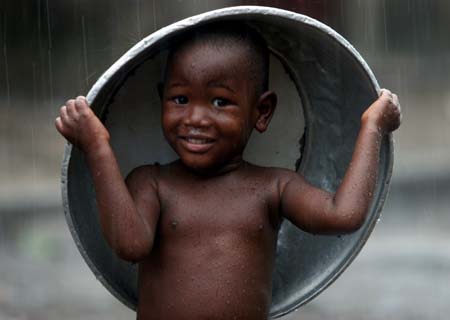
children with water in Africa, articles.waterdesalinationplants.com

 Source: water desalination plants 

The improvement is also not widespread across the region, as the people in the urban areas are doing far much more better than the people in the rural areas.
Also most of the stress to obtain water is borne by the women and girls. It's been said that globally it costs women a total of 152 million hours daily to obtain water.
If access to water is improved, these hours can be spent doing other things which will help improve the productivity of women.

http://www.who.int/mediacentre/news/releases/2012/drinking_water_20120306/en/

Currently over 300 million of the 800 million people in Africa live in water stressed regions.

It's being projected that by 2030, 75 to 250 million people in Africa will be living in regions of high water stress, which may displace between 24 and 700 million people as living conditions become more unbearable.

http://www.gisclimat.fr/manifestation-scientifique/conf%C3%A9rence-%E2%80%9Cwater-scarcity-africa-issues-and-challenges%E2%80%9D

Paul Reig, associate for WRI's Aqueduct project, to The Huffington Post has said that "Water stress can have serious consequences for countries around the world. Droughts, floods and competition for limited supplies can threaten national economies and energy production, and even jeopardize people’s lives. If countries and international-level decision makers understand more clearly where water stress is most severe, they can direct attention and money toward the most at-risk regions."

Hence more efforts need to be concentrated on areas of water Stress in Africa, this will lead to improvements in the quality of life of the people, health, sanitation, economy, Agriculture and also help sustain the already attained development.




Monday, 28 May 2012

Quench my thirst. Part 2

Way forward : Having highlighted a few of the problems affecting water availability in Subsaharan Africa, it's time to face the challenges squarely and help nip in the bud the morbidities and mortalities occurring from water related diseases. Thus far, humanitarian and non governmental organizations have helped us tremendously. Some of the governments of the nations affected have also made some contributions,but they  do not seem to be as passionate about this problem as the NGOs. It is however necessary to note that humanitarian efforts are insufficient to curb this menace. Water related research should be encouraged in Subsaharan Africa. Such that we can find more ways to better outsmart the topography and deal with the ever changing climate. Agriculture related research should also be looked into, so that we can find more ways to better improve the quantity and quality of farm products. Irrigation is key in achieving this, however it is quite expensive and may not be sustainable in certain regions. The drip irrigation and supplementary irrigation systems may  be further examined and encouraged in local communities. The use of fertilizers is also useful as this helps water retention. Economic policies that affect water should be thoroughly looked into, such that the long and short term effects are predetermined and may be avoided if negative. The town planners also have a lot to do in that, more water reservoirs and outlets need to be created to match the ever increasing population. Treaties relating to water may need to be signed so that the water deprived areas can better benefit from the regions that have been blessed by nature and water related conflicts may be reduced. It is also imperative that a proper redistribution of available resources be encouraged so that areas that have access to more dams can easily share with others. This may be seen from the fact that of the 980 large dams in subSaharan Africa, about 589 are in South Africa, leaving other nations to scramble for the remnants.  Communities also need to make efforts to procure low cost water facilities for their people. This can be done by encouraging communal efforts in the digging of wells and bore holes. Of a fact 2 or 3 neighboring communities can come together to dig a well  for their people. Water storage in the wet seasons should also be encouraged. Reservoirs should be obtained with a view to storing enough water to see the community through the long dry season. Maintenance of the available resources is also key. Committees should be enacted to watch the infrastructures and maintain it adequately to reduce the effects of wear and tear. We can not over estimate the role of the government in these matters. In this light our people should be encouraged to vote in credible leaders who have the state of the people and the nation at heart, such that they carry out community related projects with utmost urgency and care.

Friday, 25 May 2012

Quench my thirst. Part 1

Subsaharan  Africa, has been plagued by water scarcity for decades on end. The problem is presently not alarming because water demands are still being met although sparsely. A time may come however, that the amount of water required for domestic use, industrial purposes and agriculture may far exceed supply. Due to increasing industrialization and urbanization in Africa, water needs have increased tremendously over the years but the facilities to improve the water supply have not been remarkably improved. Poor governance, improper allocation of scarce resources, a poor maintenance culture, vis a vis a poor research and development culture,  contamination of available water sources  and corruption are the little foxes destroying the vine. It is sad to note that about 1.1 billion people in the world still have little or no access to safe drinking water. In the African continent and in the world at large,Subsaharan Africa is still the most affected. The ongoing battle for access to safe drinking water shows how important water is in sustaining the ongoing economic development in the African sub continent.  Statistics show that a person in the US consumes 100 to 175 gallons of water per day in his home,however an average African family uses only about  5 gallons of water per day [Wikipedia].  The consequences of this disparity are enormous and far reaching. It takes a heavy toll on women and children, most importantly the under 5 child.  Its effect on women is tremendous this is due to the gender associated roles ascribed to women in the traditional African setting. Women are the managers at home and they are in charge of water for cooking, washing, bathing and the likes. Apart from this they ensure that the house is clean and that the whole household is well catered for. They therefore have to trek miles per day in search of water to accomplish their unending tasks at home. Its been found that the average rural African woman treks about 6 kilometers per day in search of clean water. Thereby, preventing her fom being able to seek gainful employment.  Consequently, Sub-Saharan Africa is said to lose 40 billion potential work hours per year collecting water ( Wikipedia) The impact on the children too can not be over emphasized, with the water scarcity affecting their health (by increasing the under 5 mortality death toll from water borne diseases),and their education ( by increasing the time spent looking for water instead of being in school). Of the sexes,the girl child is the most affected due also to the fact that she needs to help her mother with household chores and getting water to accomplish this. Some girls are therefore, not able to attend school for this reason and even when they attend concentration is impaired as they are too tired to learn or are busy thinking of how to get water later. Absentism from school may tend to occur more regularly during draughts.  Food availability may be reduced due to the far reaching effects of water scarcity on agricultural practices. It reduces the amount of water available for farm land  irrigation and feeding cattle. Thereby reducing farm land productivity.  Regional conflict over water boundaries, land boundaries and dams occur from time to time. It has been projected that after 2022 water may be used as a weapon of war and terrorism in Africa and especially in northern Africa. (Federal intelligence agencies) Lack of fore sight by our governments as also led to poor development. UNEP projected that by 2025 about 25 African nations are likely to suffer from water stress. Urbanization without increase in the quantity and quality of infrastructure  serving the populace is also a major bane. In this day and age statistics show that a large proportion of the inhabitants of Subsaharan Africa still die from water borne diseases, such as; Cholera, dysentery, schistosomiasis, loa loa, typhoid fever, malaria and diarrhea, amongst others.  Given all these it can be seen that water scarcity may stall economic growth, development and productivity in the affected regions.

Quench my thirst ........ Intro

What does it take to have water to drink, cook with and  wash with in present day Africa? One would have imagined that in the 21st century, this would have been an easy task. Unfortunately it is not so. In a city as big and modern as metropolitan Lagos availability of clean water is still a major problem. Often times the water tap is dry, and when not dry the water is brown. Once in a while one may come across a free flowing tap with clean water. Why is water still a problem in the city? One of the main reasons is poor governance, which culminates in poor administration and then poor or non maintenance of available resources and infrastructures. Using Metropolitan Lagos as a case study, we find that the city itself is surrounded by and built upon water, yet her inhabitants struggle to obtain water for their daily needs. How much more places with little or no water, although one may also argue that majority of the water body surrounding and in Lagos are salt water and may not be so beneficial for man's everyday water needs. It's amazing to find that the water pipes from the water works to different parts of the city have not been changed since they were put in place more than 20 years ago. This leads to rust which eventually leads to burst pipes. When pipes get burst like this,one would have imagined that it would make the water works wake up to her duty by fixing it on time. However it usually takes forever to get them to fix such. Some people who have little or no access no pipe borne water are usually glad when this occurs, because it reduces the distance they have to trek in order to get water and they then start using this damaged pipe as their own source of water. This further damages the pipe. Who is then to blame, the people or the government? It is not uncommon in Lagos to see pools of water collect in the middle of the road, causing pot holes which cause delay in traffic flow and inadvertently damaging the road in question. This a lot of times may go unnoticed by the personnel in charge for months on end before anyone considers doing something about it. All of these culminate in a break in the flow of water to our homes. Now to the issue of the color of the water , it is often brown because it may not undergo the normal processes before it is pumped out and when it does it is stored in reservoirs that are not cleaned regularly. This makes us have water that may be brown as well as smelly a lot of times. This as made it necessary for landlords to reduce stress for themselves and occupants by digging their own well or bore hole. Thus reducing the burden of the common man. However, wells and bore holes are not without their own challenges....... To be continued